


Why Fidenda’s service architecture is designed to make us obsolete – eventually.
When companies say that they value long-term relationships over short-term profit, they often fail to mention is that this doesn’t just sound nice, it also makes commercial sense. Long-term customer relationships tend to be higher value than short ones.
Yet, this is also true: Nothing scares a potential customer more than the prospect of an endless consulting engagement. Professional services projects that go on for months and years tie valuable team members up in a big one-off tasks, they upset business as usual, and they often mean writing cheque after cheque with no end in sight.
Turning complexity into “light touch”
This creates a bit of a dilemma for a professional services company like Fidenda. Because there’s no denying it: Integrated Business Planning brings tremendous competitive advantage – but adopting it is complex and takes a bit of time. After all, you’re not just implementing a new technology; you’re entirely changing the way you do strategic, long medium and short-term planning in your organisation. Let’s be completely honest: it sounds a bit scary, fairly disruptive, and it’s not going to happen overnight, is it?
So one of our first jobs as a consultancy – before we can start helping our customers get there – is not to scare the hell out of them.
That’s what we’re trying to do with our service architecture. It breaks down all the services and expertise we provide (which include things like IBP best practice, department and industry frameworks, technical foundations, data readiness, and change management) in a modular way that complements what our customers can do themselves. We’ve designed it like that to make Anaplan implementation “light-touch”, i.e. accessible, affordable, as non-disruptive as possible and therefore, realistically achievable for a complex organisation. This isn’t just important for our customers, but for our business model, too. If we fail at the first hurdle, we can’t guide you all the way to success.
Take a look:
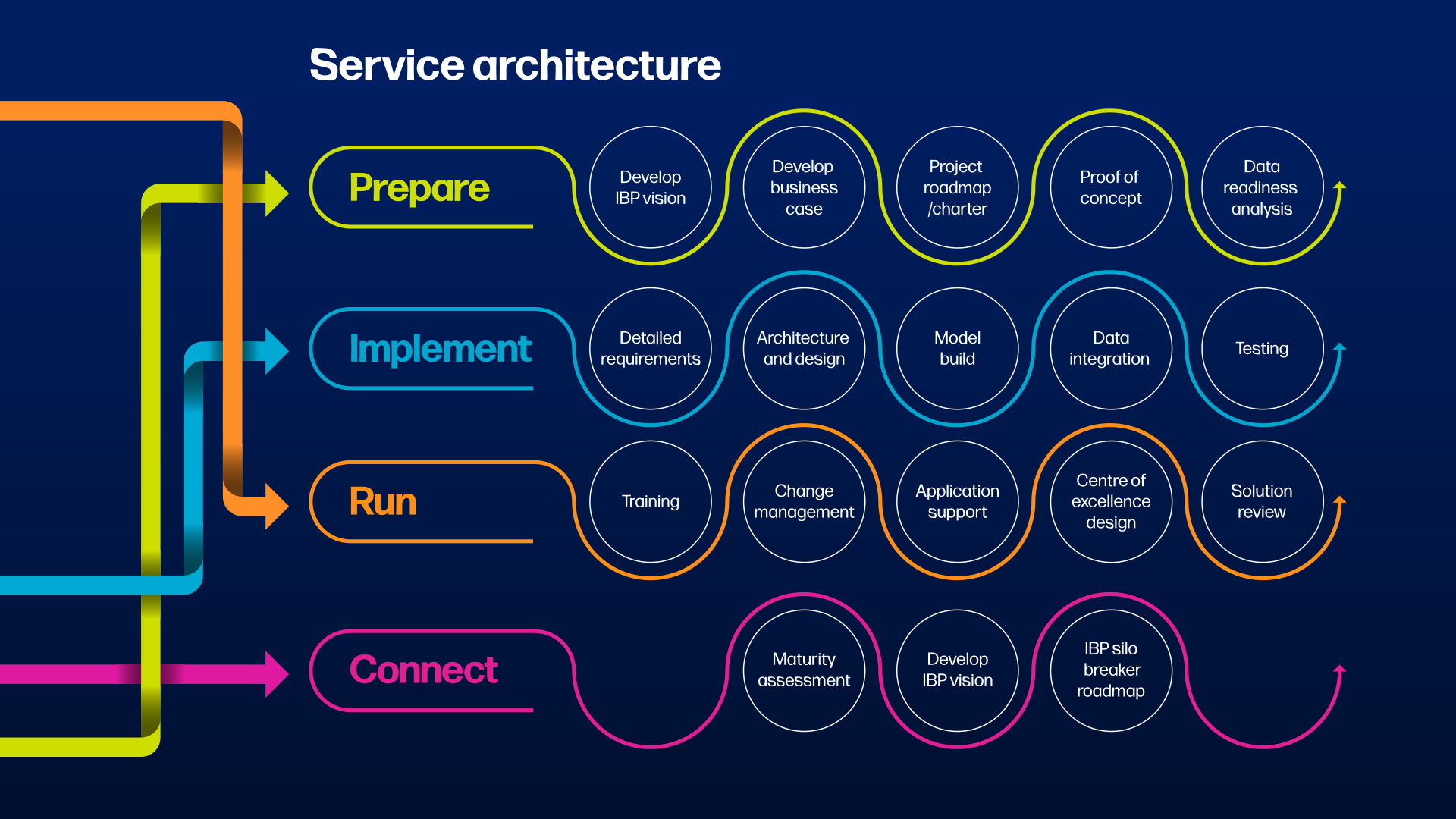
I don’t want to talk about each of these services today – we might write a more detailed services overview soon. Instead, I’d like to tell you why we’ve designed our services architecture this way.It’s built on six principles that are close to our hearts:
- It covers IBP adoption from end to end. We are keen to support our customers throughout their IBP journey, wherever they are. We have experts who can advise on an IBP strategy, design a solution, test it, train the team, etc… . They understand how the individual services are connected, which ones you need, and in what order.
- It’s bite-sized: But IBP rarely starts as a big vision, it usually starts as a point solution. We have to break down what is undeniably a complex task into manageable steps (see my recent blog about our maturity model [LINK] for a typical customer journey).
- It’s all about organisational impact: We have to help identify a small but highly visible pilot project that delivers value quickly and can help gain traction. This needs to be easy to buy in terms of cost and timelines.
- Next-step thinking is built in: We have to help customers build a roadmap to realising more value at every step along the way – to increase visibility and secure buy-in for the bigger vision.
- It bridges skills gaps: To keep costs contained and drive long-term value, we have to aim to complement what our customers’ teams can do themselves – and upskill them on the things they can’t. The idea is that you buy only what you need from us, when you need it, until you don’t need it anymore.
- It enables our customers: The ultimate aim is for our customers to eventually be able to do it all without us. That’s why working alongside inhouse teams to help them get the foundations right and training them (e.g. on Anaplan model building) is a huge part of what we do. So is change management and helping build support for the IBP project within the organisation.
What it comes down to is this
We prefer long-term customer relationships to short-term ones: they’re more rewarding for our team, they help us make a real difference to organisations, and yes, they make sense within our business model.
But ultimately we want these relationships to be built on trust and choice – not dependency or lock-in.
The ultimate goals is for our customers to eventually become independent of us. That means we’ll support you in every way we can, we trust that you’re happy with the result and continue to work with us – until your teams can do it on their own.
If you liked this, you might also be interested in this blog, which explains why connected planning needs visionary realists.
Curious about Anaplan?
If you’re curious about IBP and Anaplan, but don’t know where to start, we’d love to help. Get in touch.